“Addressing emissions reduction cannot rely on fragmented policies—it requires a comprehensive and coherent financial strategy.” — Professor Thuy Pham.
In the Café with VASEA series, we had the opportunity to speak with Professor Thuy Pham — a leading expert in climate policy and sustainable finance, currently based at Flinders University (Australia).
Drawing on both research and global practical experience, Professor Thuy Pham shared insightful perspectives on the barriers to mobilising finance for emissions reduction projects, as well as the role of green financial instruments and international cooperation in the face of an increasingly urgent climate crisis. Below is an edited and condensed version of the interview:
- In your view, what are the biggest barriers to mobilising finance for emissions reduction projects in developing countries?
Over the past two decades, climate finance for emissions reduction has increased and diversified, yet it still meets only a small fraction of actual needs and remains insufficient to achieve the goals of the Paris Agreement. Key barriers include:
- Policy-related barriers:
- Many global financial commitments have not been fully delivered, especially as both developed and developing countries face political instability, financial crises, and post-COVID resource constraints—forcing them to prioritize domestic economic recovery.
- International climate finance is largely provided by a small group of countries, with little expansion over decades, creating risks of disruption when political changes occur.
- Funding sources and international funds that support climate readiness and mitigation in developing countries are shrinking, without stable alternatives.
- Inconsistencies between global, national, and local policies reduce incentives for stakeholders to invest in emissions reduction. For example, when tax and financial incentives favor high-emission sectors (such as hydropower or large-scale agriculture) over forest-based mitigation, investments tend to flow toward the most economically beneficial sectors.
→ This highlights the need for a comprehensive financial strategy rather than fragmented, sector-by-sector reforms.
- Market and financial mechanisms:
- Instruments such as carbon markets and green bonds are still evolving, with unclear regulatory frameworks and guidelines. Legal, economic, and social risks make stakeholders cautious.
- High implementation costs, combined with low willingness to pay, limit economic incentives.
- Science and technology:
- While technologies (AI, digitalization) have improved emissions measurement, reliable impact assessment methods remain lacking.
- Limited data and measurement standards make it difficult for investors to assess effectiveness, particularly for emerging models like forest carbon and blue carbon credits.
- Capacity and awareness:
- Many stakeholders face limitations in technical, financial, and cross-sectoral capabilities.
- Small businesses, local communities, and poorer countries are at a disadvantage in accessing global finance.

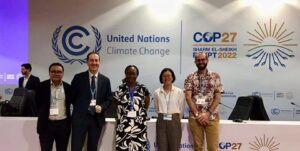
Prof. Thuy Pham with colleagues at UN – Climate Change Committee
- How effective are green finance instruments (such as green bonds or carbon pricing), and which hold the most potential in the next decade?
Green financial instruments are still under development and require more time to assess their effectiveness, particularly in emissions reduction. Their application also varies depending on political, economic, and social contexts, requiring adaptation to local legal frameworks and lessons from pilot implementations.
Importantly, the goal is not to identify a single “best instrument,” as each serves different purposes and stakeholders. In practice, these instruments are deployed in parallel to diversify funding sources.
Therefore, the key lies in how they are combined and operated within an integrated strategy. Choosing the right instrument, at the right time, for the right target group—and combining them effectively to optimize economic, environmental, and social outcomes—is what truly matters.
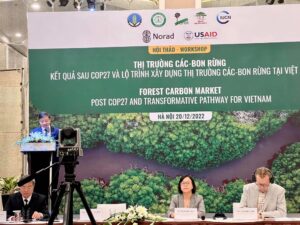
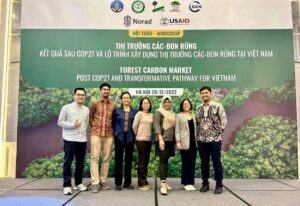
Prof. Thuy Pham at the Conference Forest Carbon Market in Hanoi
- How do climate policies differ between developed and developing countries, and how does this affect international cooperation?
Global research shows that there is no major difference in policy direction across countries, as they follow common reporting frameworks under the United Nations and continuously learn from one another through international cooperation mechanisms.
The main differences lie in:
- Socio-economic development conditions
- Scientific and technological capacity
- Policy priorities and financial resources
As such, each country must design its own solutions—there is no one-size-fits-all approach. Investment in science and technology is critical to strengthening policymaking capacity and market development.
However, in an increasingly interconnected global economy, international cooperation is essential. For example, policies like the EU’s Carbon Border Adjustment Mechanism (CBAM) demonstrate that emissions reduction effectiveness depends heavily on coordination with partner countries.
→ Sharing financial resources, technology, and experience will remain the foundation of global climate cooperation.
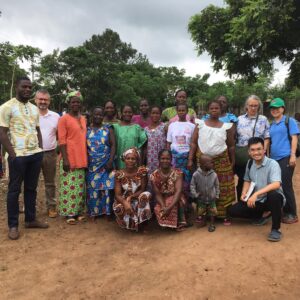
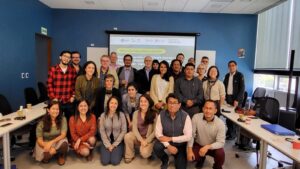
Prof. Thuy Pham with colleagues in international projects.
~~~~~
About Prof. Thuy Pham
Prof. Thuy Pham is a Professor of Public Policy and a political and social scientist specializing in the political economy of climate change. Her research focuses on low-emission development, carbon markets, biodiversity conservation, and just transitions, with a strong emphasis on inclusivity in climate policy.
With extensive global experience, she has supported developing countries, international financial institutions, multinational corporations, and indigenous communities in designing and implementing effective and equitable climate policies and projects. Her work particularly prioritizes vulnerable groups—including women, youth, ethnic minorities, and low-income populations—ensuring they can participate in and benefit from climate initiatives.
She has received numerous prestigious international awards, including the Australian Climate Action Alumni Award (2023), along with multiple global fellowships and leadership recognitions. She also serves on the scientific committees of major global initiatives on climate change, including the Global Landscape Forum, the International Land Coalition Asia Program, the Global Forests, People, Climate Initiative, the Global Land Programme, and the Global Comparative Study on REDD+.
Her research has significantly contributed to global, regional, and national climate policies, including the United Nations Sustainable Development Report (2016), the Green Climate Fund’s sectoral and gender guidelines, the World Bank’s Forest Carbon Partnership Facility strategies, the New York Declaration on Forests progress assessment, and global carbon market strategies.
