From the hands of craftsmanship, the soul of art, and the depth of language emerged a scientist with global influence.
In this edition of Café with VASEA, we are honored to introduce Professor Nam-Trung Nguyen – an Australian Laureate Fellow and one of the most internationally influential Vietnamese-origin scientists in the fields of microfluidics and nanofluidics.
He received his PhD and Habilitation from Chemnitz University of Technology, worked at Robert Bosch GmbH, and was a postdoctoral researcher at the University of California, Berkeley. He previously held the position of Professor and Director of the Micro- and Nanotechnology Centre at Griffith University, and has been consistently recognized as one of Australia’s leading researchers in Analytical Chemistry from 2020 to 2024.
Currently, Prof. Nam-Trung Nguyen is ranked 8th globally in microfluidics and 2nd in nanofluidics. He is also the author of Fundamentals and Applications of Microfluidics – a foundational textbook widely used around the world in the field of microfluidics.
Café with VASEA: Professor Nam-Trung Nguyen, you often begin your talks with memories of the subsidy-period era in Hanoi. How did those experiences shape your scientific mindset?
Prof. Nam-Trung Nguyen: The subsidy period left a deep mark on me. I grew up in Hanoi just after the war ended and went abroad to study before the Đổi Mới reforms had even begun. The scarcity and hardship of that time shaped several qualities and ways of thinking that are very compatible with scientific work: curiosity, problem-solving under all conditions, and grit.
Curiosity made me read extensively, I devoured any books or newspapers I could get my hands on. It also developed a crucial skill: self-learning and independent exploration, which is essential in frontier research. Scarcity forced us to find solutions. At that time, I loved collecting and reading books. Books were printed on recycled paper with poor soft covers, and they would fall apart after a single read.
When I was around 10 years old, I tried to rebind my favorite books with hardcovers and cloth covers. From sourcing materials to assembling covers and stitching the spines, the process was very similar to how one later approaches a research project. A bit older, I experimented with time-fuse firecrackers – buying materials from Bình Đà village near Hanoi – or assembling transistor radios from components bought at flea markets. Alongside these hobbies, I still had to study intensively for university entrance exams, which trained my time management very early on. At that time, entering university and winning a scholarship to study in the Soviet Union or Eastern Europe was the only way to continue satisfying one’s curiosity.
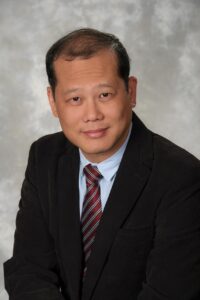
In his early years, Prof. Nam-Trung Nguyen made many significant contributions to research
Café with VASEA: Looking back at more than 30 years of internationally competitive research, what do you think has been the key to persistence and success in an academic career?
Prof. Nam-Trung Nguyen: The key factor is what English calls “grit” – persistence. “Endurance” is probably not a perfect translation. We often think luck plays a major role in success, not only in academia but in many fields. However, I believe only persistence allows us to seize opportunities and turn them into success.
I went to East Germany in 1987, then in 1989 the Berlin Wall fell. Germany was reunified in 1990, and the Soviet Union collapsed in 1991. During such unstable times, without determination, I could easily have dropped out of academia and gone into business instead – restaurants, import-export, trading – things I was not interested in.
Instead of moving to West Germany and restarting my studies, I stayed in East Germany, completed my engineering degree, pursued my PhD, and later earned a Doctor of Science. Even securing stable research opportunities at that time was extremely difficult. I had to renew my visa annually under difficult and sometimes discriminatory conditions from the immigration office to complete my doctoral research.
At that time, the U.S. had no diplomatic relations with Vietnam, and Vietnamese passport holders could not travel to the U.S. until after 1995. In 1997, after defending my PhD, I went to the U.S. for postdoctoral research. When I returned to Ho Chi Minh City in 1999, I could not find a job due to lack of local residency registration, so I continued seeking research opportunities in Singapore and have essentially continued working abroad ever since.
Café with VASEA: In your research journey, how do you view the role of curiosity and personal discipline?
Prof. Nam-Trung Nguyen: Discipline has already been discussed through “grit.” Curiosity, on the other hand, has been with me since childhood and throughout my 30-year career.
Curiosity is formed when you constantly ask “Why?” about everything you observe. Even when experiments do not produce expected results, the question “Why?” often opens new and sometimes even better directions than the original hypothesis. Curiosity is also the driving force behind self-learning – learning new languages, interdisciplinary knowledge, programming, operating new equipment, and adopting new technologies.
Café with VASEA: Why do you believe practical skills and hands-on experience are fundamental for scientists?
Prof. Nam-Trung Nguyen: I was strongly influenced by the German higher education system. In engineering disciplines, Germany emphasizes practical training before theory. Many of my university classmates had already undergone vocational training and could operate drilling, milling, and electrical systems.
In my case, I came from a general secondary education system that was shortened due to wartime conditions, so I lacked many technical and practical skills. During my five-year engineering program, I had multiple internships in factories and had the opportunity to operate machines and production lines.
This experience shaped my later research mindset: research questions must be practical, implementable, and applicable. In interdisciplinary research, we must also understand problems from the perspective of other fields to collaborate effectively.
Café with VASEA: How has multilingual ability and cross-cultural experience supported your career?
Prof. Nam-Trung Nguyen: We often assume that English as a second language is sufficient in academic careers. However, in academia – and also in business and industry – social connectivity skills are extremely important.
Mastering additional languages not only enables communication but also opens up entirely new worlds of culture, lifestyle, and ways of thinking. This helps not only with personal development but also with leading multicultural teams.
Understanding and integrating different cultures allows for more creative approaches and solutions. Moreover, multilingual and cross-cultural skills create many opportunities for collaboration and expand professional networks.
Café with VASEA: Within your current Australian Laureate Fellowship research, what impact do you expect to be the most significant?
Prof. Nam-Trung Nguyen: Within the Australian Laureate Fellowship, I focus on discovery research in both theory and technology. The theoretical framework aims to systematically and efficiently describe fluid–structure interactions in biochemical analytical devices.
The outcomes will establish the foundation for a new field I call micro elastic fluidics. Applications include wearable devices, implantable devices, and lab-on-a-chip systems for biochemical analysis, early disease detection, and preventive healthcare.
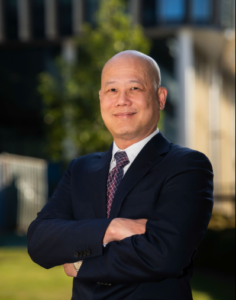
Prof. Nam-Trung Nguyen continues to diligently dedicate himself to scientific advancement today
